Assessment, lease quote and contract, acquisition, insurance, and delivery.
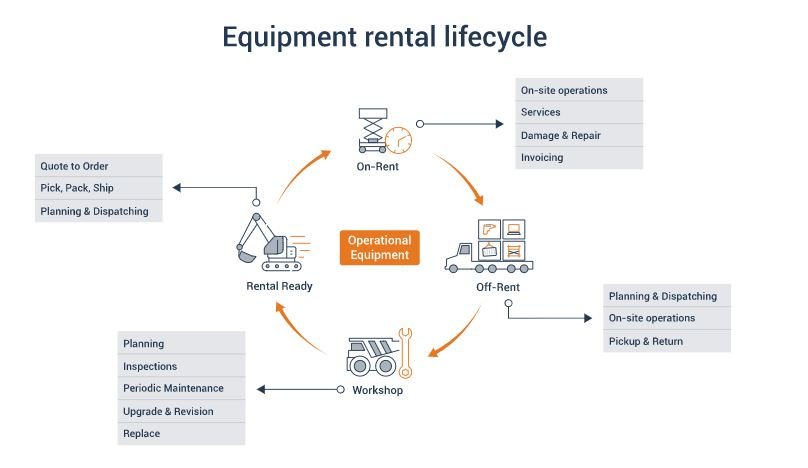
Equipment rental cycle
Managing equipment across its full operating life
PALCor’s rental cycle links readiness, on-site use, return, workshop planning, and renewed operational availability.
Operational equipment
A continuous cycle of readiness and support
The equipment rental cycle in the company profile is organized into four connected operating states.
Operational Equipment
PALCor rental lifecycle
Acceptance, operator training, on-site operations, utilization, and support.
Turnover, inspection, acceptance, pick-up, return, and parking arrangements.
Planning, preventive maintenance, upgrade, retention, disposal, or replacement.
From requirement to delivery
Rental ready starts with the operating need
The cycle begins with assessment, followed by a lease quote and contract with the equipment user. Acquisition, insurance, and delivery prepare the asset for use.
Acceptance and checklist procedures, together with on-site operator training, establish the handoff into active operations.
Shared responsibilities
Clear roles during equipment use and return
The profile distinguishes lessor and lessee responsibilities throughout the rental cycle.
Lessor Responsibilities
- Assessment, lease quote, and contract
- Acquisition, insurance, and delivery
- Acceptance checklist and operator training
- Turnover, inspection, acceptance, pick-up, and return
- Planning and periodic or preventive maintenance
- Upgrade, retention, disposal, or replacement planning
Lessee Responsibilities
- On-site operation of the equipment
- Driver or equipment operator assignment
- Fuel, oil, and operating maintenance
- Damage, repair, and loss accountability
- Warehouse, storage, security, and parking space
- Control and monitoring of equipment utilization
Workshop planning
Returning equipment to operational readiness
After an off-rent inspection and return, the workshop phase determines the next best action for the asset.
Plan
Review the equipment condition, operating history, and next requirement.
Maintain
Perform periodic or preventive maintenance required for continued service.
Upgrade or Retain
Keep the asset in the portfolio or improve it for the next operating cycle.
Dispose or Replace
Retire or replace equipment when that best serves the operating requirement.
Start with the equipment requirement
Share the intended use and operating location so PALCor can begin an assessment.